

How to Start Substack Right.
Discover which parts of Substack matter most when you're starting and how to use them together.

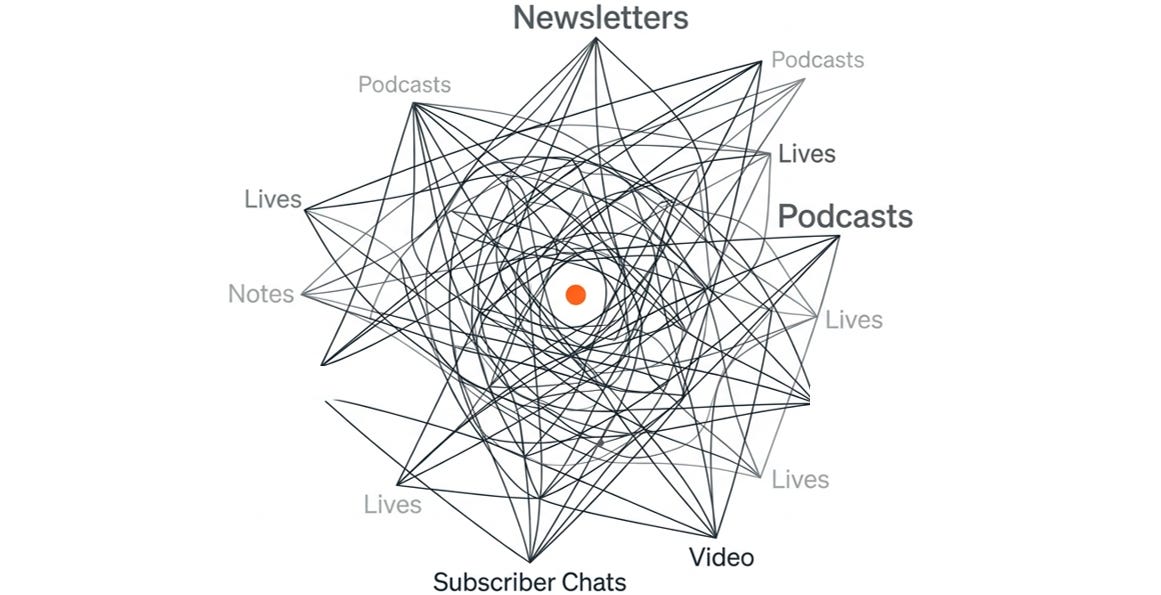
Substack is a lot of things, so it’s often very confusing to take everything in all at once.
It’s a newsletter, It’s a podcast, but then there’s Notes that are kind of like tweets, and there are Lives, Video content, and Subscriber Chats...
Forget momentum when, honestly, it’s even hard to determine what to do or where to start.
So this article is just for that, laying out the landscape so that beginners would have a grasp of what they are about to undertake.
NOTE: There's a Free Resource for you at the End!
The first requirement is simple: you need something to write about.
At this stage, there are two types of beginners:
Those who have nothing to write about and
Those who have too many things they want to write about.
If you do not know what to write about, this article should help you how to find your niche. - I will also be linking articles below to better support this one
Once you have determined what to write about, a common trap is to treat Substack like a simple blogging tool.
I have seen many writers publish high-quality pieces, but then nothing happens, leading them to quit prematurely, perhaps concluding, “Maybe this just isn’t for me.”
This happens primarily because there is so much friction and noise before someone gets to subscribe to you, and the odds against beginners are huge.
So nataurally It’s very common to experience a long lag when you’re starting.
It’s also not helpful to compare yourself to larger accounts. They naturally get more attention because aside from the fat that they’ve spent quite some time already refining their message, they have also already built an audience which at the moment amplifies the reach of everything they publish.
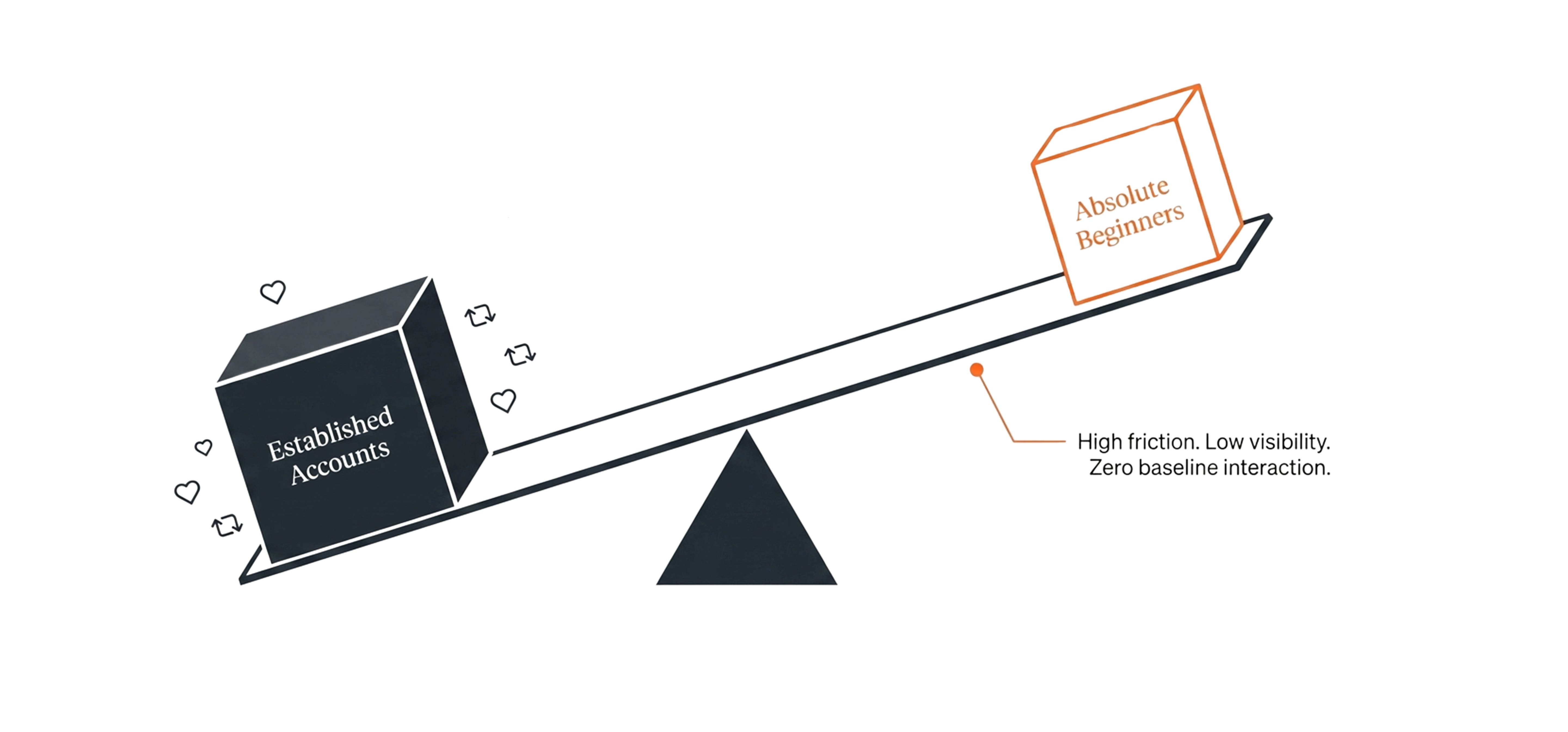
So if you’re getting less traffic than the larger accounts you see, it’s probably not because your work is bad. It’s simply the reality of starting from zero.
You have to put in a lot more effort to push your content into other people’s feeds, and that often means spending more time than “just writing,” .
However, that doesn’t mean you have to grind relentlessly all the time to get there.
Things will be a whole lot easier if understand that , although Substack has many components, they aren’t disconnected from one another.
They work together as one system, with each tool complementing and strengthening the others and so you have to take advantage of this.
Don’t swim against the tide, but don’t also wait for a fish to wash ashore either.
As a beginner, it’s important to focus on the most essential forms of content first.
Trying to learn everything at once can quickly become overwhelming, leading to burnout. More importantly, mastering the fundamentals gives you a solid foundation to build on later.
Focusing your energy also allows you to create more thoughtful, higher-quality content because your attention isn’t scattered across too many things.
That’s why I recommend starting with Articles and Notes. They form the foundation of almost everything else you’ll do on Substack.
Assuming that you have published your first few articles, it’s time to let them work harder for you. Don’t just leave them sitting there.
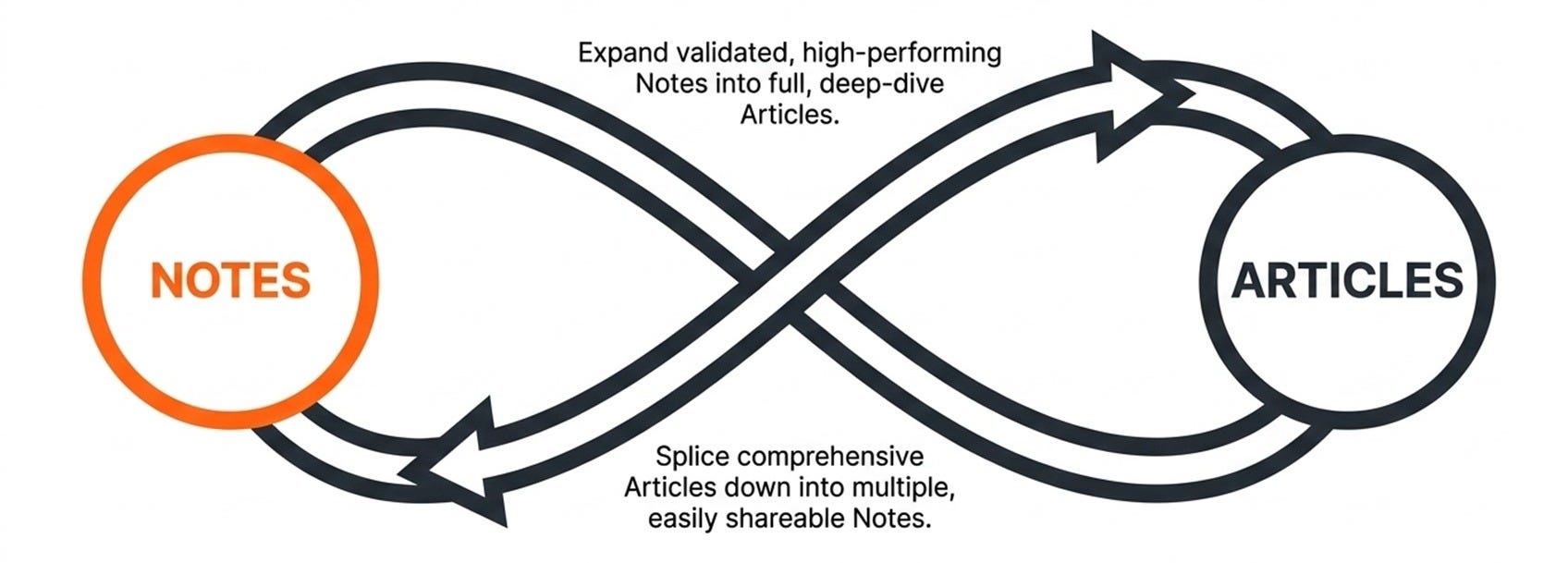
Break each article into smaller ideas and turn those into Notes. One article can easily become several Notes, helping more people discover your work.
The reverse works too. If you have a spark of an idea, post it as a Note first. If it resonates and performs well, expand it into a full article.
Keep repeating this cycle, and you now have a content engine instead of constantly starting from scratch, along with other benefits such as;
You’ll reinforce your message through repetition - which is how those mentioned big accounts refine and establish their message.
Build a coherent library of work
Save time and other resources everytime you need to publish something.
Validate new ideas; by testing them as Notes before investing time in a full article. Instead of wasting ideas, you’ll get the most out of every one of them.
At the same time, engage with other writers, your readers, and conversations happening across Substack.
This smaller workload is much easier to sustain.
Over time, you’ll discover ways to streamline your process, and you’ll naturally find new ways to use other content formats to reinforce your strategy.
You’ll also be able to master your niche better and preferably niche down or be more specific, thus refining your message as well..
Not only will your publication build momentum from this, but your writing habits will too.
Here’s an article discussing the friction between someone discovering your work and becoming a subscriber, along with ways to reduce those barriers.

Here’s an article explaining the primary forms of content on Substack, what role each one plays, and how they work together to help you grow.

If you’d like a more detailed breakdown of each content type from NOTES - ARTICLES - SUBSCRIBER’S CHAT discussed in this article, check out this free three-part guide.
All my articles are free to read. If you’ve been enjoying them and want to show a little love, you can buy me a coffee ☕ using the link below. Your support truly helps me keep creating.
That’s all for today!.
I appreciate you so much for reading up until here! 😊 If you think this article could help someone, feel free to share it or like it it really helps expand its reach to help others as well. 💌
YAAAYYY! Glad to see you back in action here!
Although, you left so much good content behind, it was like you never really. went away.
Looking forward to what’s next❣️
This is great advice! I’ve been here for a little while now but those first few months were sloooooow growth. I think readjusting my expectations and realize while I was slowly growing I was also refining my ideas and becoming a better writer so definitely not time wasted. Plus now I have old content I can polish up and recycle that almost no one has read before 🤣