

Part 1: How to Do Less But Get So Much More on Substack
The Power of Automation for Writers Who Want to Scale Without Burning Out

Who wouldn’t want to do less but get better results?
If you’d rather take the long, manual, and time-consuming route, this probably isn’t the article for you. But if you’re ready to simplify your Substack workflow and still grow faster, keep reading.
If you’re new here, you’ll probably get the most benefit from this (and you’ll see why in a bit). And if you’ve been around Substack for a while, you’ve likely already realized one thing:
Writing on Substack can easily start to feel like a full-time job. Writing, promoting, tracking, and engaging it’s a lot.
Most writers eventually hit a point where they realize:
“I can’t possibly do all this and still write consistently.”
That’s exactly where automation comes in.
It’s not about replacing your creativity it’s about supporting it. It’s about building systems that take care of the repetitive stuff so you can focus on what truly matters: writing and connecting with your readers.
Or simply put:
Automate where humans add no value so you get twice as much time for creativity.
Before we dive into specific tools and setups (that’s coming soon), let’s first get clear on which parts of Substack you can and should automate and why they matter so much for your long-term growth.
Because most of what I’ve shared here so far has focused on the front end of Substack how to write better articles, create engaging Notes, and build visibility. But there’s been a gap on the back end: the systems that keep everything running smoothly for the long haul.

Hey, just a small note : everything I write here is free to read. I haven’t put anything behind a paywall.
If you’ve been enjoying the posts and ever feel like showing a bit of support, you can buy me a coffee ☕
It truly helps me keep this newsletter going and allows me to keep everything free.
I’ll keep doing my best to show up and share things that are hopefully useful to you. 💛
The Three Core Areas of Substack Automation
There are three major areas of Substack you can automate and when they work together, your whole writing system runs smoother, more predictably, and more sustainably:
Foundation (Growth & Engagement)
Data Side (Analytics & Insights)
Content Side (Creation & Workflow)
The reason I keep emphasizing why it’s important to start automating early is because…
It’s the thing I wish I had done.
Not as some optional “back burner” skill but as something that should’ve been right beside writing, editing, and publishing from the very start.
Now that I’ve been on Substack for quite some time, catching up on automations feels like trying to organize chaos too much data to process, too many missed opportunities, and way too much time wasted doing things that didn’t need to be done manually.
And when you’re already juggling writing, networking, analytics, and reader engagement, it’s really hard to insert automation later. It’s kind of like the saying:
“Start them young.”
1. The Foundation: Automation for Growth & Engagement
Think of this as your engine.
This area includes things like:
Lead generation systems
Welcome sequences for new subscribers
Segmented email flows (free vs. paid readers)
Simple reminders and re-engagement triggers
Why it matters:
It keeps your Substack growing without you manually promoting every post.
It ensures readers don’t just arrive they stay, engage, and eventually convert into supporters.
It gives every new subscriber a consistent experience that feels intentional, not accidental.
Now, here’s the tricky part: Substack still doesn’t have a built-in automated email sequence feature.
That means when a new subscriber joins, they don’t automatically get a guided experience that nurtures them into becoming long-term readers and that’s a missed opportunity.
A welcome sequence helps you do just that. It introduces your world, builds a connection, and keeps people reading without you having to manually follow up every single time. That’s the kind of automation that compounds over time.
Backups Matter Too
Substack makes it easy to build an email list but here’s a question:
How often do you actually export your subscriber list?
If the answer is “a month ago” or “I’m not sure,” this is your sign to start automating backups.
Because if something unexpected happens (and platforms change all the time), you don’t want your hard-earned subscribers to vanish with it.
Having an automated backup ensures your email list your biggest asset, is safe and ready to be used elsewhere if needed.
Why it matters:
You protect your most valuable asset: your audience.
You’ll never lose years of growth because of a single tech glitch or policy change.
You gain peace of mind knowing that whatever happens, your work and relationships are safe.
2. The Data Side: Automation for Analytics & Insights
Once your growth systems are set, the next step is knowing what’s actually working.
This is where data automation comes in it saves hours of manual tracking and helps you make smarter decisions.
If you’ve read my article on how to find your Substack niche, you’ll know how valuable analytics are for shaping your content strategy. They help you spot patterns in your audience’s preferences, understand what’s performing, and decide what direction to take your publication next.
But here’s the problem: doing all that manually isn’t sustainable.
Imagine having a system where, with just one click, all your Substack data views, subscribers, engagement syncs into a single dashboard or Notion database. That’s the goal.
A few examples of metrics you can automate tracking for:
Total Articles – counts all posts tagged with a specific niche
Total Views – sum of all views from those articles
Subscribers Gained – total new subscribers from those articles
% External Views – percentage of traffic coming from outside Substack
Productivity Score – subscribers per article in that niche
Topic Tagging – identifies what themes or categories your writing leans toward
Why it matters:
When your data is automated, you stop guessing and start strategizing.
If you’ve seen my article series on content strategy and niche identification, imagine getting all those benefits, but fully automated. No manual effort, no guesswork everything done for you. >-<
You’ll see exactly what content, timing, or audience segments drive your best results.
For new writers, this is gold it gives you clarity faster, without the confusion of “what’s working and what’s not.”
Data automation doesn’t just save time it saves energy. It turns overwhelm into insight, so you can create with direction instead of doubt.
3. The Content Side: Automation for Creation & Workflow
Now that your foundation and data are covered, let’s talk about the creative side your content system.
Automation here doesn’t mean AI writing everything for you. It means having smoother, more efficient workflows so ideas flow naturally into drafts, drafts into posts, and posts into published work without you losing momentum.
Here’s the key mindset shift:
Your post isn’t just an output.
Every single one of them is actually data material you can reuse, repackage, and learn from. In another perspective, they’re actually inputs that allow you to take compounding into your own hands to boost your growth.
You shouldn’t wait for things to compound you can make them compound.
If your past posts could be automatically analyzed, you’d uncover patterns, connections, and ideas you might’ve missed turning your own writing into a map for what to create next, while quietly streamlining your process behind the scenes.
Example:
Turn one email into three Notes automatically.
That’s automation that multiplies your impact without multiplying your effort.
Why it matters:
You stay in creative flow instead of juggling tabs, trackers, and scattered notes.
You turn your past work into a living content library one that’s coherent, connected, and easy to pull ideas from when you need them most.
You start spotting natural links between your topics, making your writing feel more cohesive, purposeful, and aligned.
You make every piece of content work harder for you feeding future posts, insights, and even products instead of constantly starting from scratch.
You build a system that scales with you, so your focus stays on writing, not maintaining.
And because everything’s connected, idea generation (and even content creation itself) becomes faster, smoother, and way more intentional.
Why This Matters Most If You’re Just Starting Out
Because this solves most of the real struggles beginner Substack writers face not the surface ones, but the ones that quietly pile up behind the scenes.
You stop struggling to stay consistent. Your workflow runs even when you’re tired or busy, so showing up doesn’t rely on willpower alone.
Ideas and content flow more easily. Your past posts start feeding your next ones; no more staring at a blank page.
You naturally discover your niche. Automated insights help you see what connects most with your readers, instead of guessing or forcing it.
You start attracting loyal readers, not random ones. Because your content becomes more connected and coherent, people stick around for you.
Your workflow finally feels sustainable. You’re not juggling scattered tabs, trackers, and tools; everything connects and compounds quietly in the background.
You build structure early before chaos hits. The later you set this up, the more data you’ll have to chase, clean, and organize later on (and trust me, that’s way harder).
Most people quit not because they can’t write, but because everything feels scattered. They focus too much on the front-end, the engagement, the networking, the branding, and forget about the systems that make all that sustainable.
Automation fixes that.
It gives you space to actually write and grow without the constant scramble behind the scenes.
What’s Coming Next
In Part 2, we’ll dive deeper into each of these areas, breaking down how to set them up and how to make them work together.
Because this isn’t about automating creativity.
It’s about automating the noise so your creativity can finally breathe.
Think of your system as a living thing. Substack changes, tools evolve, and we’ll adapt right alongside them.
Coming Soon — 12-Day Email Course for Beginners
I’m preparing a 12-day email course that will guide you step by step through building your Substack foundation.
Subscribe below to get notified as soon as it launches, it’s coming very soon.
📧 Subscribe to Get Notified
Or if you’d prefer a more detailed structure where everything’s already laid out and you just have to fill things in…
I’ve got one ready for you, too! No need to jump from one resource to another, it’s all packaged in one place.
Most Substack writers, early in their journey, somewhere between 50 to 200 subscribers, struggle
📊 From Personal Reflection to Tactical Teaching
…but before you dive into sharing lessons, you also need to master the platform where you’re sharing them.
Most Substack writers early in their journey—somewhere between 200 - 500 subscribers—struggle with a few common things:
Drowning in advice, but not sure where to start
Learning a lot, but not applying it consistently
Publishing, but not knowing if it’s working or just leading to burnout
That’s why I created a Premium Handbook for writers in that exact stage.
It’s filled with principles, tools, and frameworks to help you master the three core content types on Substack: Articles, Notes, and Subscriber Chat.
If you want clarity, structure, and something that moves you forward, take a look below.
Take a look inside:
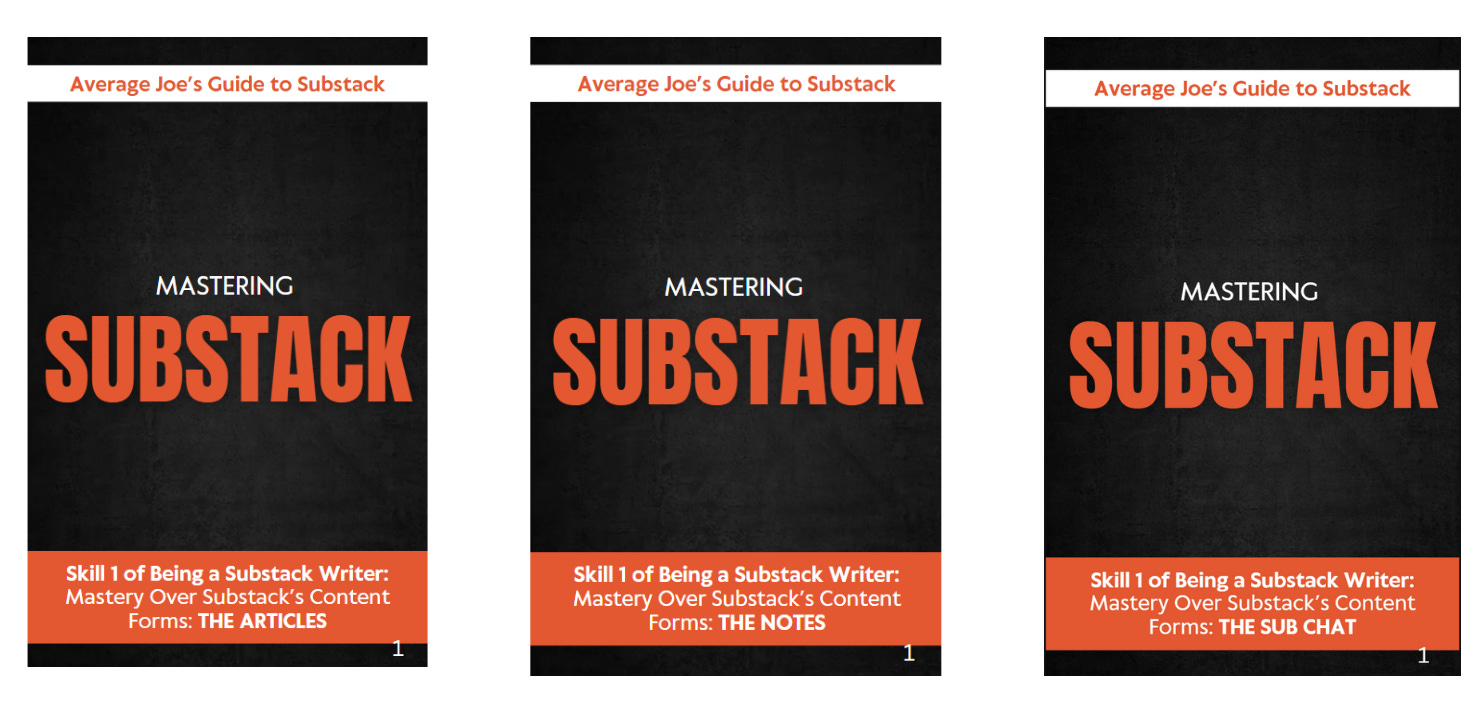
Get full access and start building with clarity now!
Gear up — so you’re ready when Substack high season hits:
That’s all for today!. I appreciate you so much for reading up until here! 😊 If you think this article could help someone, feel free to share it or like it it really helps expand its reach to help others as well. 💌