I know this because during the earlier years of my college, I remember dreading them so much when a bunch of them were given to us by professors to read. I spent a good amount of time on just one paper, having to reread the same paragraph over and over again multiple times and opening Google to look up some words.
Imagine if you have to do this for a couple of articles; it’s taxing.
To start, it is very useful to familiarize the structure of a research article
Understanding the structure and sections of a research article is essential for grasping the paper as a whole. Typically, these articles are divided into sections: introduction, methods, results, discussion (which may sometimes combine results and discussion), and conclusion. They also include abstracts—250 to 300-word summaries that highlight the background, methods, and results of the study.
Since research articles are very well structured, it makes sense to follow a structured approach when reading them as well.
It's important to note that some research articles present original studies where tests were conducted, which means they follow the structure I mentioned earlier. In contrast, review articles compile and summarize results from various studies, so they usually don’t have the same subsections. Instead, they directly address specific topics.
With that said, let’s dive in.
The first step in reading a research article is obviously finding the article that best suits your needs.
You can use some library databases like Google Scholar and EBSCO to find articles. These tools simplify your search with filters for publication dates, relevance, and article types, including reviews. They also offer citation formatting options, link to different versions and related articles, and allow you to set alerts for new publications.
These libraries are game changers and make browsing for articles so much faster.
Now that you know how and where to find the articles, the next step is to choose the articles.
The first thing I look at is the title; I read the title and evaluate if it covers the topic I am trying to learn. The next thing I look at is the date. There are many similar articles, so you should always go for the most recent one. Sometimes, if there are many articles about my topic, I try to set the custom date to only five years from the current year. Very old articles are sometimes obsolete, but there are exceptions, and there’s actually one rule our professor taught us: if we wanted to cite an article that is very very old, it could be justifiable if that study is a landmark study.
A landmark study is a highly influential research study that introduces groundbreaking ideas or findings, shaping future research, practice, or policy, and often becoming a widely cited reference in its field.
Lastly, once the title and date are all fine, I start reading all the abstracts of those papers and determine which ones I will read thoroughly and which I will set aside.
The next step is the most difficult: the actual reading.
I begin reading the introduction because that is where you find the rationale and the objective of the study.
After reading the introduction, you should be able to answer these questions more or less:
What specific problem are they addressing?
What existing knowledge do we have about this problem
What gaps are they aiming to fill? Or their Objectives? And how do they plan on doing that?
You may also find their hypothesis, which is an educated guess about their expected results if tests are conducted.
Tip: List their objectives, as it will help you comprehend what’s going on the entire research article as you go along, these objectives directly relate to their methods and results.
If those questions are clear to you, you can now proceed to the methods.
You should expect that methods also have subsections, and it is important to pay attention to the heading of each subsection.
Tip: If possible, note the method's subheadings under the relevant objectives. It’s better if you can write them down
Later on, this will also be very useful because the results are typically arranged in a logical order that corresponds to the sequence outlined in the materials and methods section
Basically, the results will answer the methods as the methods cater the objectives.
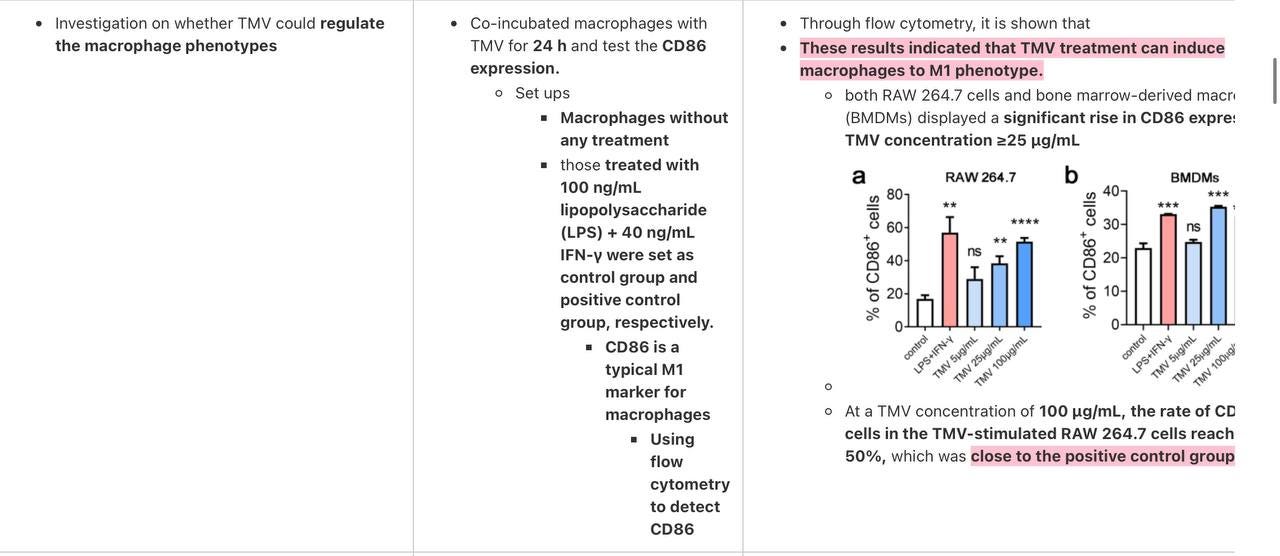
Tip: When reviewing multiple papers, especially for a report or a paper, I create a table with the methods in the first column and the results in the second. This organized approach makes it easy to quickly look up information or compare findings across different studies.
Example of that table: 1st Column: Objective — 2nd Column: The method to carry out the objective— 3rd column: The result of the method conducted
I will link a note I made when I was in college at the end for you to see.
Tip: I also create a concept map, especially for more complex experiments, to help me follow along. Taking notes during the methods section is crucial because it’s easy to get lost if you only read passively.
Next is reading the results.
The last thing you would want when you are finally in the results section is to be confused about what these results are for and where they came from. This is the usual mistake if one just glides over the introduction and methods, which usually costs you to reread the whole thing. This is also why I emphasized writing the objectives and categorizing the methods under them is very helpful.
Reading the results is a breeze if you know where did the result came from (methods) and why did need such result (objectives)
Tip:You should also expect that results sometimes would be full of numbers, which makes it confusing, but try to focus on what those details are trying to say and summarize each subsection in one or two sentences.
Tip: Don’t forget to check for tables and figures; some studies have a separate file called supplementary material/reading where they elaborate more on things for better understanding.
Finally the discussion.
As I have said, some discussions are written directly after the results; some are in a separate section. Either way, you should expect to see implications of the results here, explanations for why the results turned out the way they did, or correlations with the results of some studies.
Remember the “results under methods” and “methods under objectives”? Now add the discussion under the results.
Typically, you don't need to take notes on the discussion section; if you've grasped the earlier parts, reading for this section will be easy.
While reading, it's important to keep asking questions such as:
What are the primary implications of their findings, and how do they impact your research topic?
Did the researchers achieve their objectives and find what they aimed to discover?
Are there discrepancies in their methods or experimental design, and what alternative approaches could have been considered?
Do their results align with your expectations or the researchers' expectations?
Tip: List and summarize each of the key findings in one sentence each.
After finishing the discussion, you will find a very short conclusion and sometimes, I usually go back to the abstract and read it again just to tie everything together.
You could also look for the researchers’ recommendations—what do they think needs further work? This could be your starting point for digging deeper into the topic. You can check if work such as that has already been done.
Tip for review articles
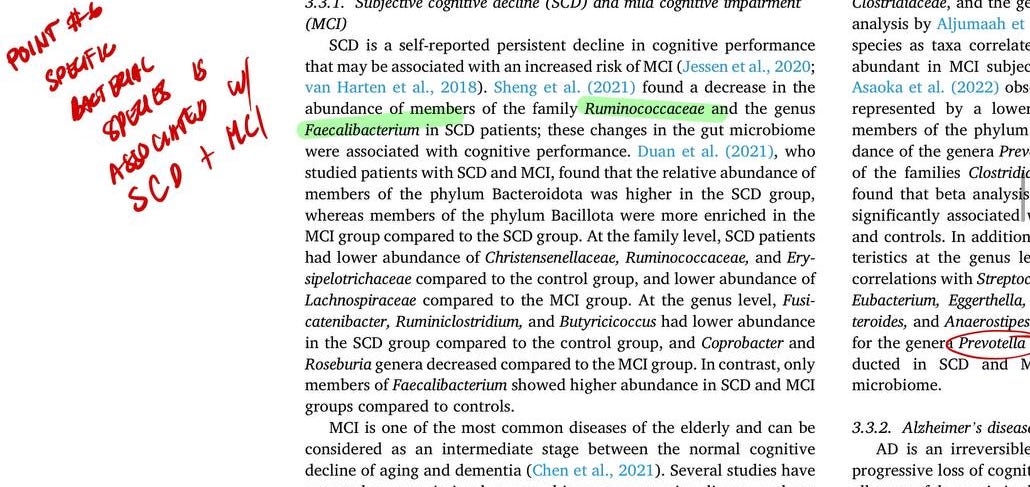
When reading a review article that lacks specific subsections, I jot down interesting points in the margins as I go along. I write a brief phrase or sentence next to each relevant section, which helps me create a list of topics to discuss later or points to review (I usually number them as well). Since I note them beside the paragraphs where they appear, I can easily locate them later.
That is all for today, I hope you found this useful and have a good day!
As promised:
Here are the notes I made applying some of the tips I shared earlier on. It is for a paper on “The potential of the Tobacco Mosaic Virus to slow down tumor growth in the early stages and be very effective at stopping tumors from spreading later on”.
And if you want to read the article (It’s a very interesting article; you should check it out. ) Here's the link:
Ou, J., Zhu, M., Ju, X., Xu, D., Lu, G., Li, K., ... & Niu, Z. (2023). One-Dimensional Rod-like Tobacco Mosaic Virus Promotes Macrophage Polarization for a Tumor-Suppressive Microenvironment. Nano Letters, 23(5), 2056-2064.
Additionally, if you're just starting out, these organized notes can be incredibly helpful. However, as you gain more experience, you may find that you don't need such detailed notes; I often just jot down quick scribbles instead.
A side tip: If you will be presenting the paper, especially for people who are not in your field, it’s helpful to have a short definition of hard terms at the beginning so that your audience doesn’t get lost along the way.